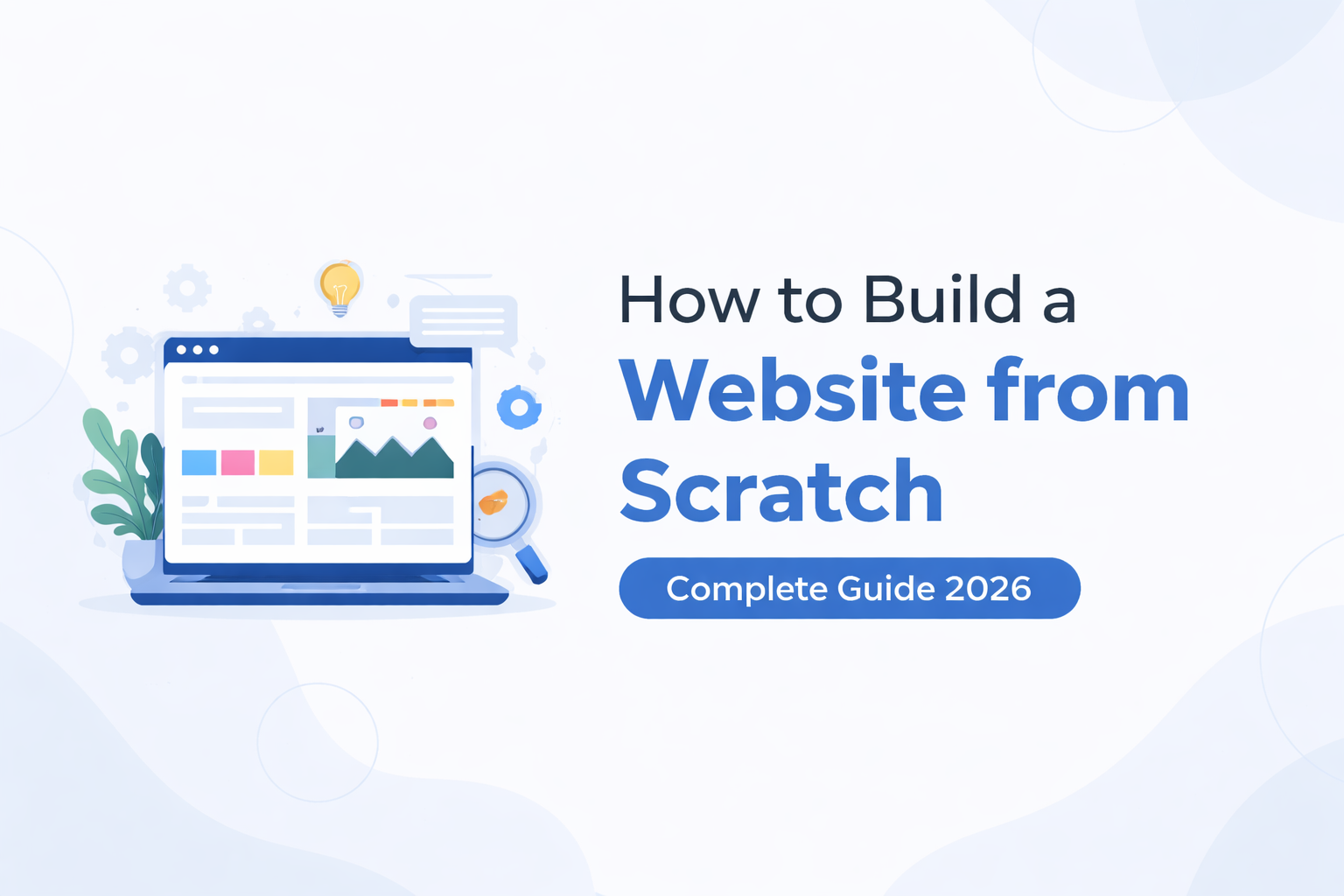
In 2026, having a website is no longer optional — it is essential. Whether you are a freelancer, a small business owner, or a startup founder, your online presence defines your credibility. If you have ever searched "how to create a website 2026" or wondered where to begin, you are in the right place.
This guide will walk you through how to build a website step by step — from choosing a domain name to launching a fully functional, SEO-ready site. And if you are looking for professional website development in Jaipur, this guide will also help you understand what the process looks like from the inside.
Let's get started.
What Do You Need to Build a Website from Scratch?
Before you start, you need three fundamental things: a domain name, a web hosting plan, and a platform or code to build on. Website development for beginners can feel overwhelming, but breaking it into steps makes it manageable.
Here is what the process looks like at a high level: plan your website, register a domain, choose hosting, build your site, optimize it for SEO, and then launch it.
Step 1: Plan Your Website Purpose and Structure
Before anything else, define why you are building the website. Is it for a blog, a business, an eCommerce store, or a portfolio? Your goal shapes every decision — from design to content to functionality.
Ask yourself: Who is my target audience? What action do I want visitors to take? What pages do I need?
A simple website typically includes a Home page, About page, Services or Products page, Blog, and a Contact page. Planning this structure early saves a lot of time later.
Step 2: Choose a Domain Name
Your domain name is your online address. It should be short, memorable, and relevant to your brand or niche. Here are tips on how to choose a domain name that works:
Keep it under 15 characters if possible. Use your brand name or a keyword related to your business. Avoid numbers and hyphens. Always go for a .com extension if available.
You can check domain availability and register through platforms like Namecheap, GoDaddy, or Cloudflare Registrar. Many hosting providers also offer free domain name registration for the first year when you sign up for a hosting plan — a great way to save money as a beginner.
Step 3: Choose the Right Web Hosting
Web hosting is where your website's files live. Choosing the right host is critical for speed, security, and uptime. Here is what to look for when comparing the best web hosting 2026 options:
Speed and server performance, customer support quality, SSL certificate (HTTPS), uptime guarantee (99.9% minimum), and pricing that fits your budget.
For those on a tight budget, there is cheap web hosting for beginners available through providers like Hostinger, starting as low as ₹99/month. If you want premium performance, Bluehost and SiteGround are excellent choices. The debate of Bluehost vs Hostinger 2026 often comes down to budget vs performance — Hostinger wins on price, while Bluehost excels in support and WordPress integration.
If you plan to use WordPress, look specifically for the best hosting for WordPress 2026, which includes features like one-click WordPress installation and automatic updates.
Step 4: Choose Your Website Platform
This is one of the most important decisions in the website development for beginners journey. You have two main paths:
No-Code Website Builders — These are drag-and-drop tools that require zero coding knowledge. The most popular options are WordPress, Wix, and Squarespace. When comparing WordPress vs Wix vs Squarespace 2026, here is the quick breakdown:
WordPress is the most powerful and flexible — ideal for blogs, business sites, and eCommerce. Wix is beginner-friendly with beautiful templates but limited scalability. Squarespace is best for creatives and portfolio sites with stunning designs.
For most users, WordPress is the recommended choice. You can install WordPress in one click from your hosting dashboard, and then use a page builder like Elementor for a seamless drag-and-drop experience. Learning how to use Elementor opens up unlimited design possibilities without writing a single line of code.
Coding from Scratch — If you want full control and customization, learning how to code a website HTML CSS gives you that power. HTML structures the page, CSS styles it, and JavaScript adds interactivity. This approach takes more time but gives you a unique, high-performance website.
Step 5: Design Your Website
Good website design for beginners follows a few key principles. First, keep it simple and clean. Second, make sure it is responsive website design — meaning it looks great on all screen sizes. Third, prioritize mobile-friendly website design, because over 60% of web traffic in 2026 comes from smartphones.
When you are working on how to design a website layout, focus on visual hierarchy — the most important content should be seen first. Use white space generously, choose readable fonts, and maintain brand consistency in colors.
If you do not want to design from scratch, use the best website templates 2026 available on platforms like ThemeForest, Elegant Themes, or the WordPress theme library. Good website UI UX design basics ensure that visitors not only stay longer but also take action.
Step 6: Add Content and Optimize for SEO
Once the design is ready, it is time to add your content. Every page should have a clear purpose, a strong headline, and a call-to-action. But content alone is not enough — you need website SEO basics for beginners to get found on Google.
Here is what on-page SEO involves: using the right keywords in your titles and headings, writing compelling meta description and title tags, using header tags (H1, H2, H3) correctly, adding alt text to images, and ensuring fast page load speed.
How to optimize website for Google also means setting up Google Search Console — a free tool that helps you monitor your site's performance in search results. Submit your sitemap, check for indexing errors, and track which keywords bring traffic.
In 2026, Core Web Vitals are more important than ever. These are Google's metrics for measuring page experience — loading speed (LCP), interactivity (FID), and visual stability (CLS). A site with excellent Core Web Vitals ranks higher and converts better. Use Google PageSpeed Insights to audit and fix issues.
For on-page SEO for new website, tools like Rank Math or Yoast SEO (for WordPress) make optimization easy by giving real-time suggestions as you write.
Step 7: Test and Launch Your Website
Before going live, test everything thoroughly. Check all links, forms, and buttons. Test on multiple browsers (Chrome, Firefox, Safari) and devices. Make sure the site loads fast and is mobile-friendly website design compliant.
Once everything is working, launch your website and submit it to Google Search Console for indexing. Promote it on social media, list it on Google My Business, and start creating blog content to drive organic traffic.
Why Local Website Development Matters
If you are a business owner, working with a local agency can make a significant difference. Website development in Jaipur has grown rapidly in recent years, with many agencies offering full-service solutions — from design and development to SEO and maintenance. Whether you are a retail store, a hospital, a school, or a startup, website development in Jaipur professionals understand the local market and can create websites tailored to your audience.
The advantage of choosing a local partner for website development in Jaipur is real-time communication, faster turnaround, and personalized service. And if you ever need to scale your project or add new features, having a local team makes collaboration much smoother.
Frequently Asked Questions (FAQ)
Q: How long does it take to build a website from scratch? A: Using a website builder like WordPress, you can launch a basic site in 1–3 days. A custom-coded website can take anywhere from 2 to 8 weeks depending on complexity.
Q: Can I build a website for free? A: Yes, platforms like Wix and WordPress.com offer free plans, but they come with limitations like ads and subdomains. For a professional website, a paid hosting plan is recommended.
Q: Which is better — WordPress or a website builder? A: WordPress is better for scalability, SEO, and flexibility. A website builder like Wix is better for absolute beginners who want a quick launch.
Q: What programming language is used for websites? A: HTML and CSS form the foundation. JavaScript adds interactivity. Backend development uses languages like PHP, Python, or Node.js.
Q: Do I need to know coding to build a website? A: No. With no-code website builders and tools like Elementor, you can build a professional website without writing any code.
Conclusion
Learning how to build a website from scratch in 2026 is one of the most valuable skills you can develop — and it is more accessible than ever. Whether you choose a no-code platform or dive into HTML and CSS, the steps remain the same: plan, build, optimize, and launch.
With the right tools, the right hosting, and a strong SEO strategy, your website can rank on Google and bring real results for your business. And if you need expert help, website development in Jaipur agencies are ready to take your vision and turn it into a high-performing digital asset.
Start today — your online presence is waiting.