Digital vs Traditional Marketing: Which is Better in 2026?
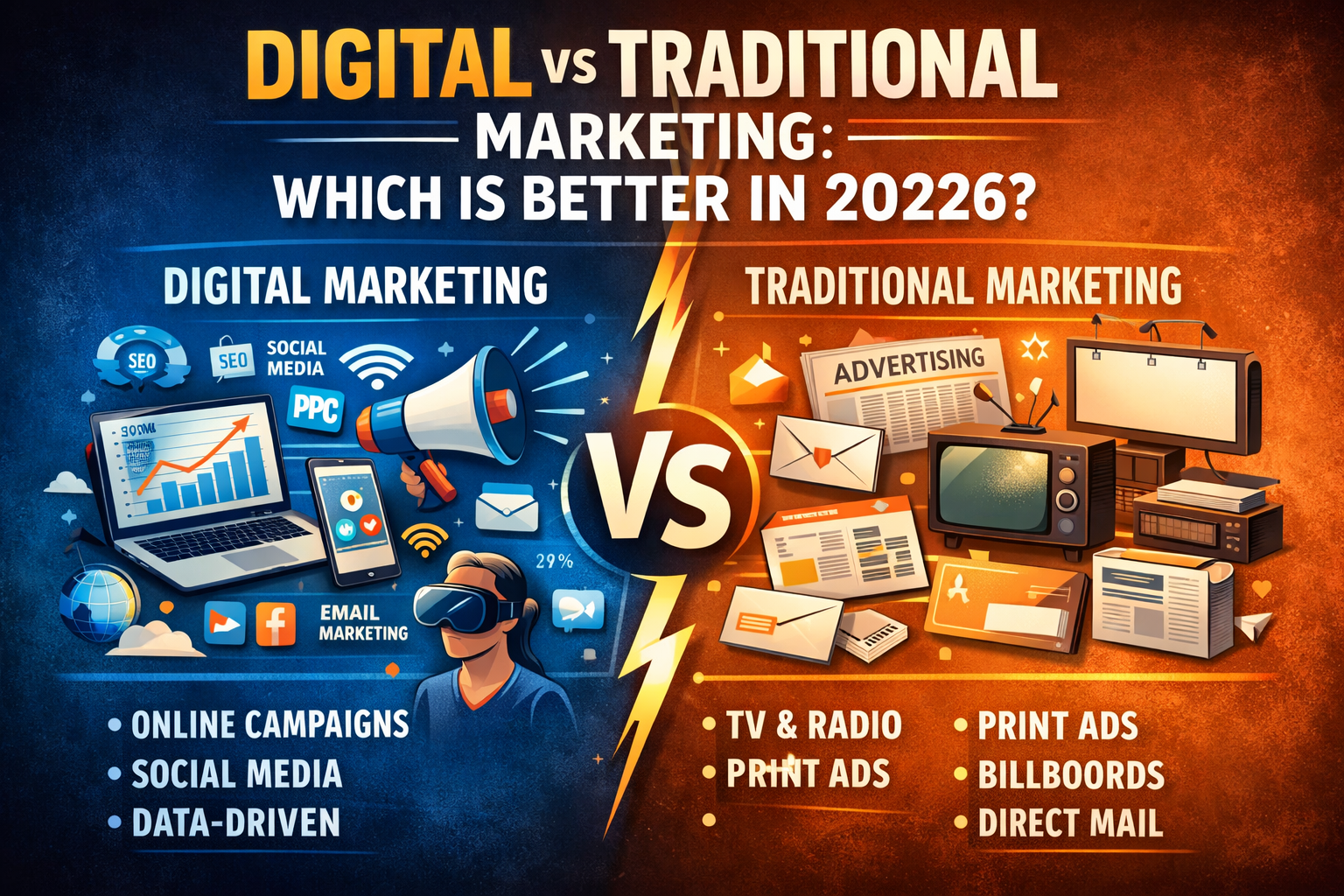
In 2026, marketing is no longer just about advertising in the newspaper or on the road. Small businesses have two major alternatives: Digital Marketing and Traditional Marketing. Many entrepreneurs have often wondered – Digital Marketing vs Traditional Marketing: which one is better in 2026?
This blog will give you a complete comparison of both in 2026 for small businesses, which will help you decide the best marketing for small business development.
Introduction
If you're a small business owner in 2026, you've probably asked yourself: "Should I invest in digital marketing or stick with traditional methods?"
The truth is, both digital marketing vs traditional marketing have their place in today's business world. But knowing which one works best for your business can save you thousands of dollars and help you reach more customers.
What is Digital Marketing?
-
Social Media Marketing (Facebook, Instagram, LinkedIn, TikTok)
-
Email Marketing
-
Search Engine Optimization (SEO)
-
Google Ads and Online Advertising
-
Content Marketing (blogs, videos, podcasts)
-
Website Marketing
Digital Marketing Benefits
-
Lower Cost: Digital marketing is often more affordable than traditional methods
-
Precise Targeting: Reach exactly the customers you want
-
Measurable Results: Track every click, view, and sale
-
Global Reach: Connect with customers anywhere in the world
-
Real-Time Adjustments: Change your campaign instantly based on performance
-
24/7 Availability: Your marketing works even when you're sleeping
What is Traditional Marketing?
-
Print Advertising (newspapers, magazines, flyers)
-
Direct Mail (postcards, catalogs, letters)
-
TV and Radio Commercials
-
Billboards and Outdoor Advertising
-
Trade Shows and Events
-
Cold Calling and Telemarketing
Traditional Marketing Advantages
-
Tangible Materials: People can touch and keep your ads
-
Local Trust: Works well for local business marketing strategies
-
Less Competition: Not everyone is doing it anymore
-
Older Audience: Reaches demographics less active online
-
Brand Credibility: Traditional ads can build trust quickly
ROI Comparison: Which Delivers Better Returns?
Digital Marketing ROI for Small Business
Digital marketing typically delivers higher ROI because:
-
You can track exactly what works and what doesn't
-
You pay only for results (clicks, views, conversions)
-
You can test and optimize campaigns in real-time
Traditional Marketing ROI
Traditional marketing ROI is harder to measure but can still be effective:
-
Brand awareness builds over time
-
Local impact can be strong
-
Trust factor can lead to higher-value customers
Digital Marketing Benefits
-
Low cost compared to traditional ads
-
Easy to track results
-
Target the right audience
-
Better digital marketing ROI for small business
-
Fast customer engagement
SEO vs Traditional Advertising: Long-Term Value
SEO (Search Engine Optimization)
Pros:
-
Brings free organic traffic over time
-
Builds long-term asset value
-
Targets people actively searching for your products
-
Compounds over time (old content keeps working)
Cons:
-
Takes 3-6 months to see results
-
Requires ongoing effort
-
Competitive in popular industries
Traditional Advertising
Pros:
-
Immediate visibility
-
Broad reach quickly
-
Works for brand awareness
Cons:
-
Stops working when you stop paying
-
Expensive for sustained campaigns
-
Hard to target specific audiences
Social Media Marketing vs Traditional Advertising
When Traditional Advertising Still Works
-
Reaching older demographics (65+)
-
Local community events
-
Building credibility with traditional audience
-
Industries like real estate, legal services, healthcare
Social media marketing vs traditional advertising.
-
Social media builds brand trust
-
Two-way communication with customers
-
Instant feedback and engagement
Digital Marketing Trends 2026
-
AI-Powered Personalization: Automated content customized for each customer
-
Video-First Content: Short-form videos dominate social media
-
Voice Search Optimization: More people using Alexa, Siri, Google Assistant
-
Privacy-First Marketing: Cookies are disappearing, first-party data is key
-
Influencer Partnerships: Micro-influencers drive authentic engagement
-
Interactive Content: Quizzes, polls, and AR experiences
-
Sustainability Marketing: Customers care about your values
Local Business Marketing Strategies for 2026
Digital Tactics:
-
Google Business Profile: Free and essential for local search
-
Local SEO: Optimize for "[your service] near me" searches
-
Facebook/Instagram Local Ads: Target customers within 5-25 miles
-
Email Marketing: Build relationships with local customers
-
Online Reviews: Encourage satisfied customers to leave reviews
Traditional Tactics:
-
Local Newspaper Ads: Still effective in smaller communities
-
Community Sponsorships: Build brand awareness locally
-
Direct Mail: Target specific neighborhoods
-
Networking Events: Personal connections matter locally
Measuring Success: Key Metrics to Track
Digital Marketing Metrics:
-
Website Traffic: How many people visit your site
-
Conversion Rate: Percentage who become customers
-
Cost Per Click (CPC): What you pay for each ad click
-
Email Open Rate: Percentage who open your emails
-
Social Media Engagement: Likes, comments, shares
-
Return on Ad Spend (ROAS): Revenue earned per dollar spent
Traditional Marketing Metrics:
-
Brand Awareness Surveys: Do people recognize your brand?
-
Coupon Redemption: How many printed coupons get used
-
Call Tracking: Use unique phone numbers for each ad
-
Customer Surveys: Ask "How did you hear about us?"
-
Sales During Campaign: Compare to baseline sales
The Verdict: Which is Better in 2026?
For most small businesses in 2026, digital marketing is the better choice.
-
Lower costs
-
Better targeting
-
Measurable results
-
Flexibility to adjust
-
Higher ROI
However, traditional marketing still has value for:
-
Local community presence
-
Reaching older demographics
-
Building trust in traditional industries
-
Complementing digital efforts
Final Recommendations
For New Businesses:
Start 100% digital, focus on building online presence, email list, and social media following.
For Growing Businesses:
Implement the 70/30 digital-traditional split to maximize reach while staying cost-effective.
For Established Businesses:
Maintain a balanced integrated approach that leverages the strengths of both methods.
Conclusion
The "digital marketing vs traditional marketing" debate isn't about choosing one or the other—it's about finding the right mix for YOUR business in 2026.
Digital marketing wins for cost-effectiveness, measurability, and targeting. Traditional marketing still delivers value for local presence and specific demographics.
Your best strategy? Start digital, measure everything, and add traditional elements as you grow. Focus on cost effective marketing for small business that delivers real results, not just visibility.
Remember: The best marketing is the one that brings customers to your door—whether that's through a Facebook ad or a well-placed flyer. Ready to boost your marketing in 2026? Start with one digital channel, master it, then expand. Track your results, listen to your customers, and adjust based on what actually works for YOUR business.