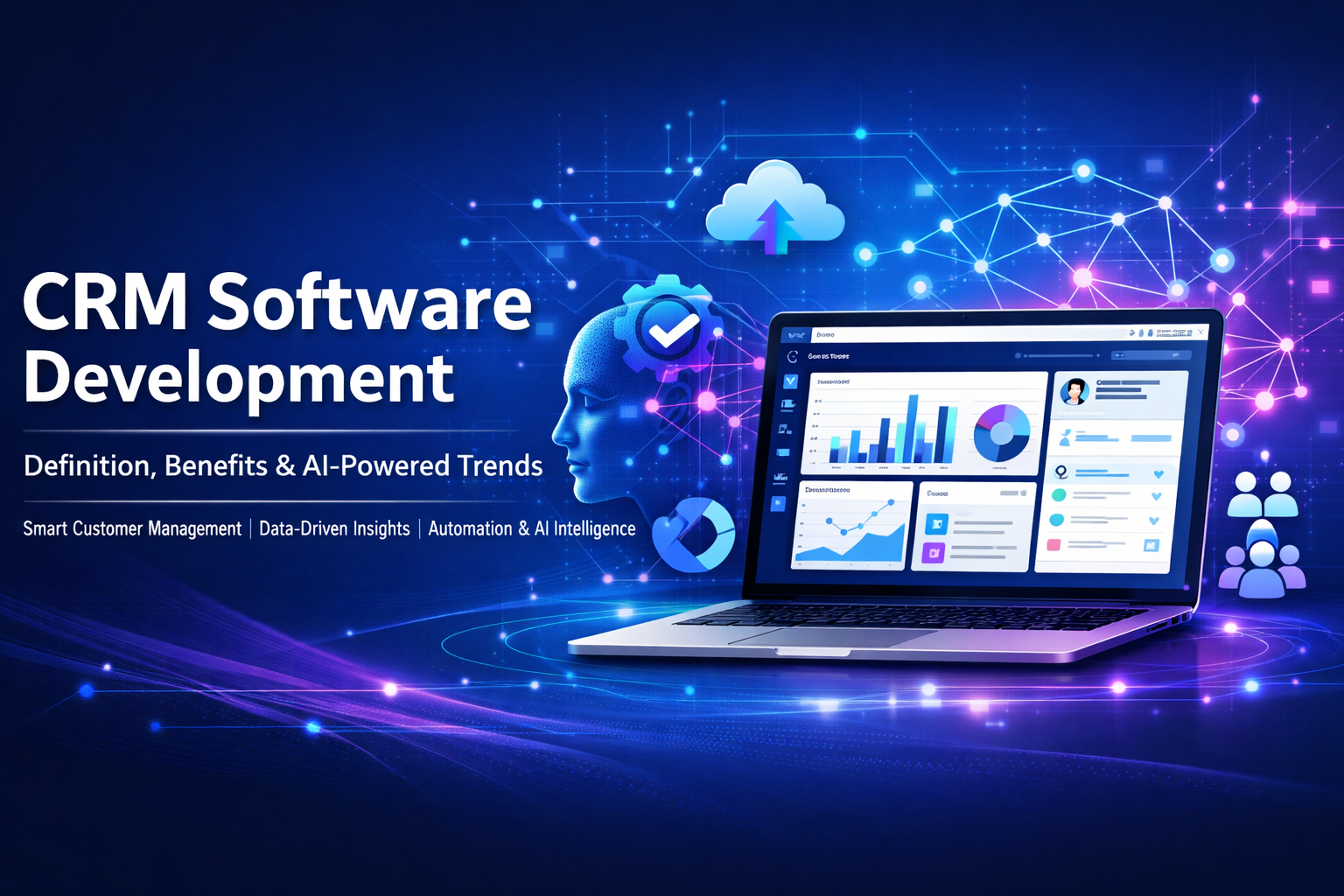
In today's fast-paced digital marketplace, maintaining strong customer relationships is no longer optional—it's essential for survival. Customer Relationship Management (CRM) software has become the backbone of successful businesses, helping organizations manage interactions, streamline processes, and build lasting connections with their customers. As technology evolves, CRM software development has transformed from simple contact management systems into sophisticated, AI-powered platforms that predict customer needs, automate workflows, and deliver personalized experiences at scale. Understanding CRM software development and its emerging trends is crucial for any business looking to stay competitive in the modern economy.
What Is CRM Software Development?
CRM software development refers to the process of creating customized digital solutions designed to help businesses manage and analyze customer interactions throughout the entire customer lifecycle. The primary goal is to improve customer relationships, enhance retention rates, and drive sales growth through better data organization and communication strategies.
Off-the-Shelf vs. Custom CRM Development
While off-the-shelf CRM solutions like Salesforce or HubSpot offer pre-built features suitable for general business needs, custom CRM development involves building a tailored system from the ground up. Off-the-shelf products provide quick deployment and standard features but may lack the flexibility to accommodate unique business processes. Custom CRM development, on the other hand, offers complete control over functionality, user interface, and integrations, allowing businesses to create a solution that perfectly aligns with their specific workflows, industry requirements, and growth objectives.
Key Features of CRM Software
Modern CRM systems incorporate several essential features that work together to create a comprehensive customer management ecosystem:
Customer Data Management serves as the foundation, creating centralized databases where all customer information—contact details, purchase history, preferences, and interaction records—is stored securely and accessed easily by authorized team members.
Sales and Lead Tracking capabilities enable sales teams to monitor prospects through every stage of the sales funnel, from initial contact to closed deals, ensuring no opportunity falls through the cracks and providing visibility into pipeline health.
Marketing Automation tools streamline campaign management, email marketing, social media posting, and lead nurturing activities, allowing marketing teams to deliver timely, relevant messages without manual intervention.
Customer Support and Communication Tools integrate multiple channels—email, phone, chat, and social media—into a unified platform, ensuring consistent service delivery and complete conversation history across all touchpoints.
Analytics and Reporting features transform raw data into actionable insights through customizable dashboards, performance metrics, and trend analysis, empowering leaders to make informed strategic decisions.
Benefits of CRM Software Development
Investing in CRM software development delivers tangible advantages that impact every aspect of business operations:
Improved Customer Relationships emerge naturally when businesses have complete visibility into customer preferences, history, and needs. This comprehensive understanding enables personalized interactions that make customers feel valued and understood, fostering loyalty and increasing lifetime value.
Better Sales Performance results from organized lead management, automated follow-ups, and data-driven insights that help sales teams prioritize high-value opportunities, shorten sales cycles, and close deals more efficiently.
Increased Productivity and Efficiency occur when repetitive tasks are automated, information is readily accessible, and teams collaborate seamlessly within a unified system, freeing employees to focus on high-impact activities that require human creativity and judgment.
Data-Driven Decision-Making becomes possible when leaders have real-time access to accurate metrics and analytics, enabling them to identify trends, spot problems early, and adjust strategies based on evidence rather than intuition alone.
Scalability and Customization for Business Growth ensure that as companies expand into new markets, add product lines, or evolve their business models, their CRM system can adapt accordingly without requiring complete replacement or major disruptions.
Role of AI in CRM Software Development
Artificial Intelligence has revolutionized CRM software from a passive database into an intelligent assistant that actively contributes to business success. AI integration represents the most significant advancement in CRM technology in recent years.
AI-Powered Chatbots and Virtual Assistants provide instant, 24/7 customer support, handling routine inquiries, scheduling appointments, and escalating complex issues to human agents when necessary. These tools improve response times while reducing operational costs.
Predictive Analytics and Customer Behavior Analysis use machine learning algorithms to identify patterns in historical data, forecasting which leads are most likely to convert, which customers might churn, and what products individual customers are likely to purchase next.
Personalized Customer Experiences are delivered at scale through AI systems that analyze individual preferences, browsing behavior, and interaction history to recommend relevant products, customize content, and time communications for maximum impact.
Automated Workflows and Smart Recommendations eliminate manual data entry and routine decision-making by intelligently routing leads, suggesting next-best actions for sales representatives, and automatically updating records based on customer activities.
Latest AI-Powered Trends in CRM Software
The CRM landscape continues evolving rapidly as new AI capabilities emerge:
AI-Driven Customer Insights go beyond basic analytics to uncover hidden patterns, segment customers with unprecedented precision, and identify cross-selling and upselling opportunities that humans might overlook in massive datasets.
Voice-Enabled CRM Systems leverage natural language processing to allow users to update records, retrieve information, and perform tasks through voice commands, making CRM interaction more intuitive and accessible while driving.
Machine Learning for Sales Forecasting analyzes historical performance, market conditions, and pipeline data to generate accurate revenue predictions, helping businesses allocate resources effectively and set realistic targets.
Sentiment Analysis monitors customer communications across channels to detect emotional tone, satisfaction levels, and potential issues, enabling proactive intervention before minor concerns escalate into major problems.
Integration with Other AI-Based Business Tools creates interconnected ecosystems where CRM systems exchange data seamlessly with marketing platforms, accounting software, project management tools, and business intelligence applications, providing holistic operational visibility.
Future of CRM Software Development
The trajectory of CRM software development points toward increasingly intelligent, accessible, and integrated systems. AI and automation will continue advancing, with systems becoming more autonomous in handling routine tasks and more sophisticated in providing strategic recommendations. Natural language processing will make CRM interaction conversational and intuitive, reducing training requirements and increasing user adoption.
Cloud-based and mobile CRM solutions will dominate the market as remote work becomes standard and businesses require access to customer information anytime, anywhere. These platforms offer superior scalability, automatic updates, and lower total cost of ownership compared to on-premise installations. Mobile-first design will ensure that field sales teams, remote workers, and executives have full CRM functionality in their pockets, enabling real-time updates and decision-making regardless of location.
Conclusion
CRM software development has evolved from a luxury for large enterprises into a necessity for businesses of all sizes. The combination of comprehensive customer data management, powerful automation capabilities, and cutting-edge AI functionality creates a competitive advantage that directly impacts revenue, efficiency, and customer satisfaction. As AI technology continues advancing, the gap between businesses using modern CRM systems and those relying on outdated methods will only widen. Investing in AI-powered CRM solutions is not just about keeping pace with technology—it's about positioning your business to understand customers better, serve them more effectively, and grow sustainably in an increasingly competitive marketplace. The question is no longer whether to adopt CRM software, but how quickly you can implement a solution that leverages AI to transform your customer relationships into your greatest strategic asset.